Death of a Parent: Perspective of a College Student

Transitioning from high school to college can be hard for some students. Then the stress of academics, finding a community and being involved in extracurriculars that will help their future puts more stress on students.

So how is this transition and high stress period different for students who have lost a parent?

“Right after the student loses their parent there is a falter in school work,” Central Michigan University Social Work Professor Myrna McNitt said, “but after a few weeks or months the student goes back to their pre-parent death academic ability.”

McNitt has not only studied and worked with children affected by parent deaths, but she has personal experience. Her nephew, who is 19, lost his mother two years ago and in living with McNitt.

McNitt said that students become emotionally frozen. They will go to class, but they won’t be able to critically think.

Even though this is serious, McNitt said that the number one thing that happens to students who have lost a parent is not an academic plunge, but more of a social component.

“A student immediately becomes closer to their family or support system. You will see the child/teen close themselves off to people that are not their support systems and hold tight to a small group of people,” McNitt said.

Central Michigan University senior Abby Nelson, 22, was interviewed about her mother’s death.
IMG_9376

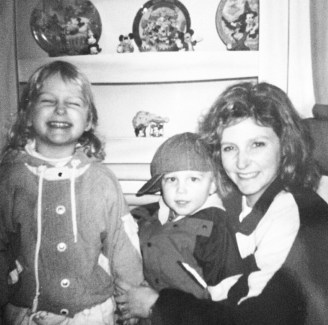
Abby Nelson’s mother, Amy Nelson, passed away suddenly from a heart attack. Pictured above is Abby, her younger brother, Jake, and her mother.

“Before my mom’s death I was ‘chatty Kathy’ according to my dad and would talk to any stranger, but then my mom died when I was four. From four to 12 I became very reserved. I clung to my dad and brother, but with anyone else I was very shy,” Nelson said, “Looking back, I believe the reason I became outgoing again when I was 12 was because my dad married again, so I had another positive mother figure in my life. I am a total extravert now, but I still have a hard time being vulnerable with others. I want to get to know them , but I won’t let them get to know me.”


McNitt said the parent/child dynamic can take a different route as well. The child can start feeling more responsibility, so the parent and child become equals viewing each other more as siblings.

Central Michigan University senior Madi Wolfe, 21, was interviewed about her father’s death by overdose.

IMG_9385

Madi Wolfe’s father, Bobby Wolfe, passed away when Madi Wolfe was a freshman in high school.

“I was never super close to my mom. I think I just didn’t understand how she put up with my dad using drugs. I didn’t understand why she would put herself and her three daughters in harms way, because my dad could get violent when using drugs. My best friend, Macy, and her family ere much more of a protective support system than my actual family. Macy’s mom was was my role model and mother figure. When my dad died I stayed with Macy’s family a lot and had more of a sister relationship with my mom,” Wolfe said.


According to McNitt, the students may have grieved properly, but grief is not linear. The death of the parent can hit them out of nowhere. A sudden flashback, a holiday, or someone mentioning the parent can cause spark the grieving process again.
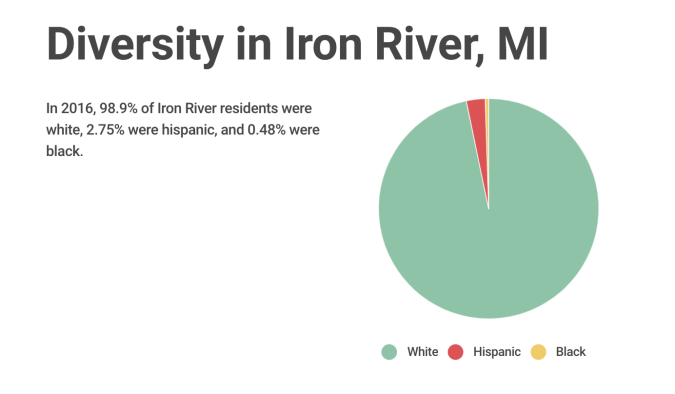
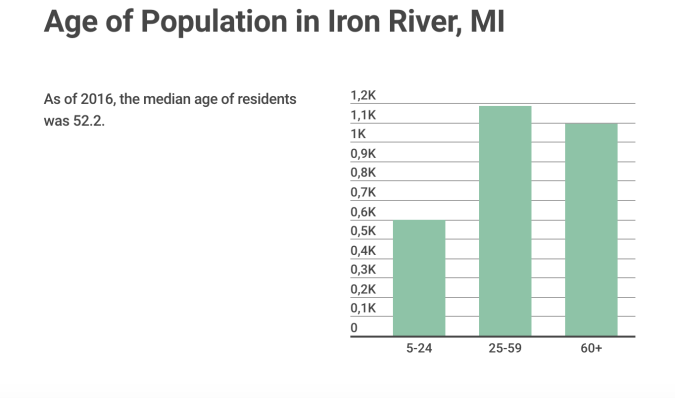


The Small, Rural Community of Iron River, Michigan

Iron River, Michigan is located in the upper peninsula of Michigan. I have lived there since birth, only leaving once I started attending college at Central Michigan University.

Screen Shot 2018-11-27 at 11.43.37 AM

Screen Shot 2018-11-27 at 11.50.12 AM


Hardworking CMU Students Put in Hours at the Library for Midterms

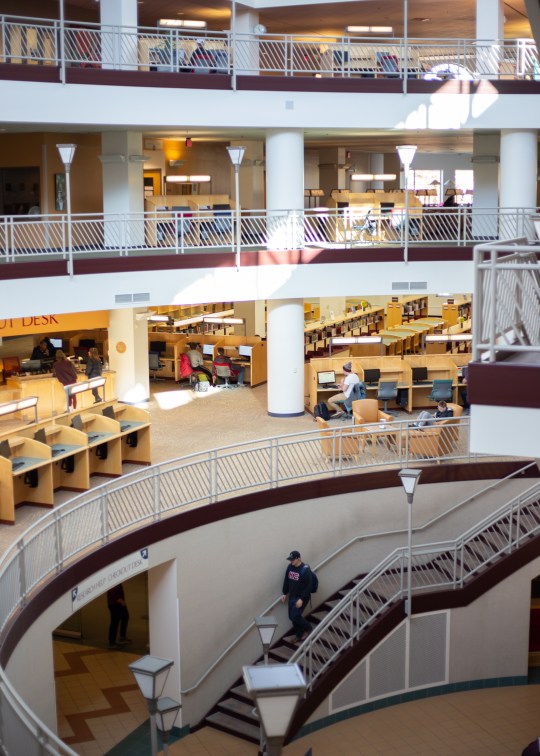
Central Michigan University’s (CMU) Park library is the hub for studying. Students are hard at work, wanting the least amount of distraction.

JRN 340 Photos (1 of 1)

The Park Library has much foot traffic during midterm week Tuesday, Oct. 23.

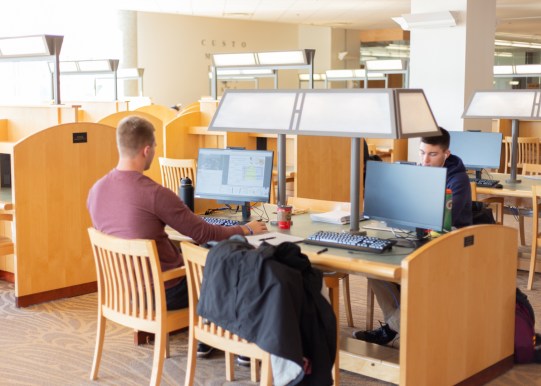
Students were found working hard studying, doing homework, working on group projects or working at the library.

JRN 340 Photos (2 of 6)

Abby Fishbaugh, Toledo senior, completes architecture homework while working at the Information Desk.

“It’s nice working at the Information Desk, because I get to work on my mid-semester project while I’m getting paid,” Fishbaugh said.

JRN 340 Photos (5 of 6)

Nate Shurlow and John Torres, Lakeview juniors, study for their last University Program class, Introduction to Biology, midterm together.

“I have three midterms: biology, business and management,” Shurlow said, “I’m taking them one at a time so I don’t get overwhelmed.”

JRN 340 Photos (4 of 6)

Nate Shurlow, Lakeview junior, switches to studying for his Business midterm.

Students look for a quiet place to concentrate. The higher the floor, the quieter it gets.

JRN 340 Photos (6 of 6)

Primary sources are close at hand in the library for students writing research papers.

Staying Informed on the Go

Podcast 1

Podcast Title: This American Life

Author/Host/Company that produced it: B.A. Parker

Episode Title and Date: Random Acts of History Episode #644, Act 1: The Miseducation of Castlemont High.

Genre/Category: Education

Format/Structure: Single host introducing, but then introducing three people who were interviewed, and then using audio from the past.

Target audience: young adults.

Description of podcast: The podcast was serious. It went in chronological order.

Description and length of the episode you listened to: I listened to Act 1 which was about 45 minutes.

Rundown: segment by segment of the podcast, how content was organized: The host, B.A. Parker introduced and closed the podcast. Another woman narrated the historical portion while also interviewing a few people in the middle. There were live audio clips of history interwoven also.


Podcast 1 Analysis

I was able to follow This American Life: Act 1 well. It was very captivating and bounced from narration to interview to live clips well which made it interesting. I think the host’s introduction and conclusion, the narration, and the interview questions were scripted, but the the actual responses were not scripted. I believe this to be true because you can’t script how others answer an interview question.

B.A. Parker’s, the host, voice was serious and captivating which helped with the serious, historical topic. The narrator did a good job transitioning to different topics and people interviewed. She would introduce the person or segment each time it changed.

The podcast was very informing. The chronological order made it easy to follow along and stay engaged. I would definitely listen to more from This American Life because I am entertained by things not commonly taught to us in history class.

I don’t know what would have made this podcast any better. I think they did a phenomenal job with their sourcing, podcast layout, and and narration.

This American Life: Act 1 was not only entertaining, but informing. I was thoroughly impressed by the amount of research done and sources that were interviewed. I learned that your podcast can only get better if you have solid sources and if you can find clips from past events to support the podcast.


Podcast 2

Podcast Title: The Daily

Author/Host/Company that produced it: Michael Barbaro

Episode Title and Date: The Disappearance of a Saudi Journalist October 11, 2019

Genre/Category: Current Events/Politics

Format/Structure: The host, Michael Barbaro, starts the podcast by introducing himself and the topic of that day’s episode. Then Carlotta Gall, the Istanbul bureau chief of the New York Times, was interviewed throughout the podcast.

Target audience: Young Professionals.

Description of podcast: The podcast is very serious, with only talking about facts. There is no opinion throughout it. Barbaro and Gall talk in depth and chronologically about Saudi Arabia’s prince and the missing Saudi journalist.

Description and length of the episode you listened to: The episode is 21 minutes with a two minute introduction and conclusion bracketing the interview.

Rundown: The host introduced the podcast, himself, and then the topic. He then introduced who he was interviewing. For the majority of the podcast it went back and forth between him interviewing Gall and Barbaro narrating.


Podcast 2 Analysis

The Daily’s episode, the Disappearance of Saudi Journalist, was easy to follow along. The content flowed well, leading from narration done by Barbaro, statements from Gall, and even audio from the Saudi Journalist stating his opinion about the Saudi government and prince.

The introduction, conclusion, narration, and interview questions were scripted. There was also a rough draft of a layout to show where some audio clips would be inserted. The transitions within the podcast where well done. They fed off of audio clips before it and did not repeat anything said previously.

The music opening and closing the podcast is a nice touch because when you hear it you instantly know what you are listening to. It has become a staple of The Daily.

The only thing that would have made this podcast better was to have newly released audio put into it to help with the facts of the day the journalist went missing. I think the podcast focuses too much on the journalist’s past, which is good context, but I would have liked there to be more research done on the present.

I am an avid listener to The Daily. It is how I often stay up to date on my news and current events. I was informed by this episode, as well as the podcast as a whole. What’s nice about The Daily is that it is shorter in time. The average time is 15-30 minutes, so I can listen to it while I am walking to class.

Audio Stories

While listening to five student podcasts I found that I enjoyed a few and some could use some work. Erica’s podcast interview of the Central Michigan University (CMU) marching band drummer was the strongest interview.

Erica: musician

Douglas Impacts Youth Through Music was a strong story for a podcast for multiple reasons. First, the natural sound of the drumming starting the podcast, between topics, and closing up the podcast was strong because the story was about a marching band drummer. Douglas, the drummer, articulated well, his voice was clear and his thoughts were in complete sentences. I also liked the story within the interview about him helping a high school drummer. There was a clear beginning, middle and end. He started out the interview saying that he was a drummer at CMU, went on to talk about how he helps youth drummers, and then finished saying that the youth drummer is now auditioning for the CMU marching band. Overall I give the podcast a 9/10.


Jordan: R&B

This interview was appropriate for a podcast platform. The podcast was strong with the supporting sound. Between interviewing Daniel, the musician, there was sound of him performing at Wayside Central. You could hear him singing, talking to the crowd and the crowd responding. The podcast sounded like Daniel was just responding to questions and not having a conversation, which made the interview choppy. Overall I give the podcast a 6/10.


Allie: High School Robotics

This interview was not appropriate for a podcast platform. It should have been made into a video interview to show the robotics, because the noises are not distinct. This podcast started out strong with the mechanics sound of robots moving. Personally the podcast did not seem too interesting to me, but the interviewee was very conversational and could make the conversation flow. Overall I give the podcast a 7/10.


Greg: Barber

This interview was strong as a podcast. It started with Rondall, the barber, speaking right away. There was no intro so it felt rushed. There was clipping noises behind him speaking to help visualize where they were speaking. Rondall also was very conversational, which showed that there were good prompt questions. Overall I give this a 7/10.


Paige: Gospel Choir

This podcast could have been stronger as a video to show the interviewee singing with her choir and where they perform. The podcast started out strong with the choir singing, which helps the listener visualize. The interview was very choppy which made me loose focus throughout the podcast. I liked that the interview went deeper into her spiritual journey, not just talking about the basics of her participating in the choir. Overall, I give this a 6/10.

Hello Friends!

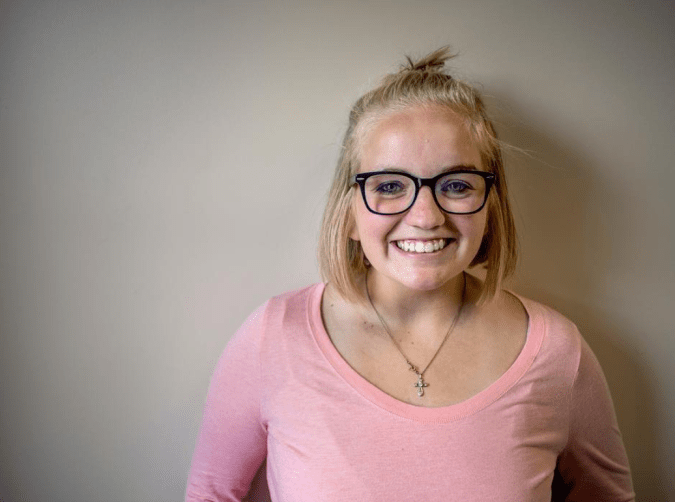
Hi, I’m Alexis!

Thanks for visiting my blog. Here you’ll find all things photography, journalism, photojournalism and design. I have a passion for volunteering, advocating and the creative field.

I aspire to work for an international humanitarian nonprofit that allows me to travel abroad and document experiences and then turning the information into public relations material.

On this blog I will share my expertise on the journalism field, creative field and my heart for loving the world.

I hope you stick around to read more!